
Pilot
Free
Try it, run a resident’s project or a small registry.
- 2 open studies
- 25 subjects per study
- 5 team members
- 30 document reads a day
EDC and owner eDiary for veterinary field studies
Case report forms, an owner eDiary with eConsent, randomization and blinding, scanned-record intake and a 21 CFR Part 11 audit trail, in one workspace a sponsor, practice or university runs itself. No implementation project, no per-study fees.
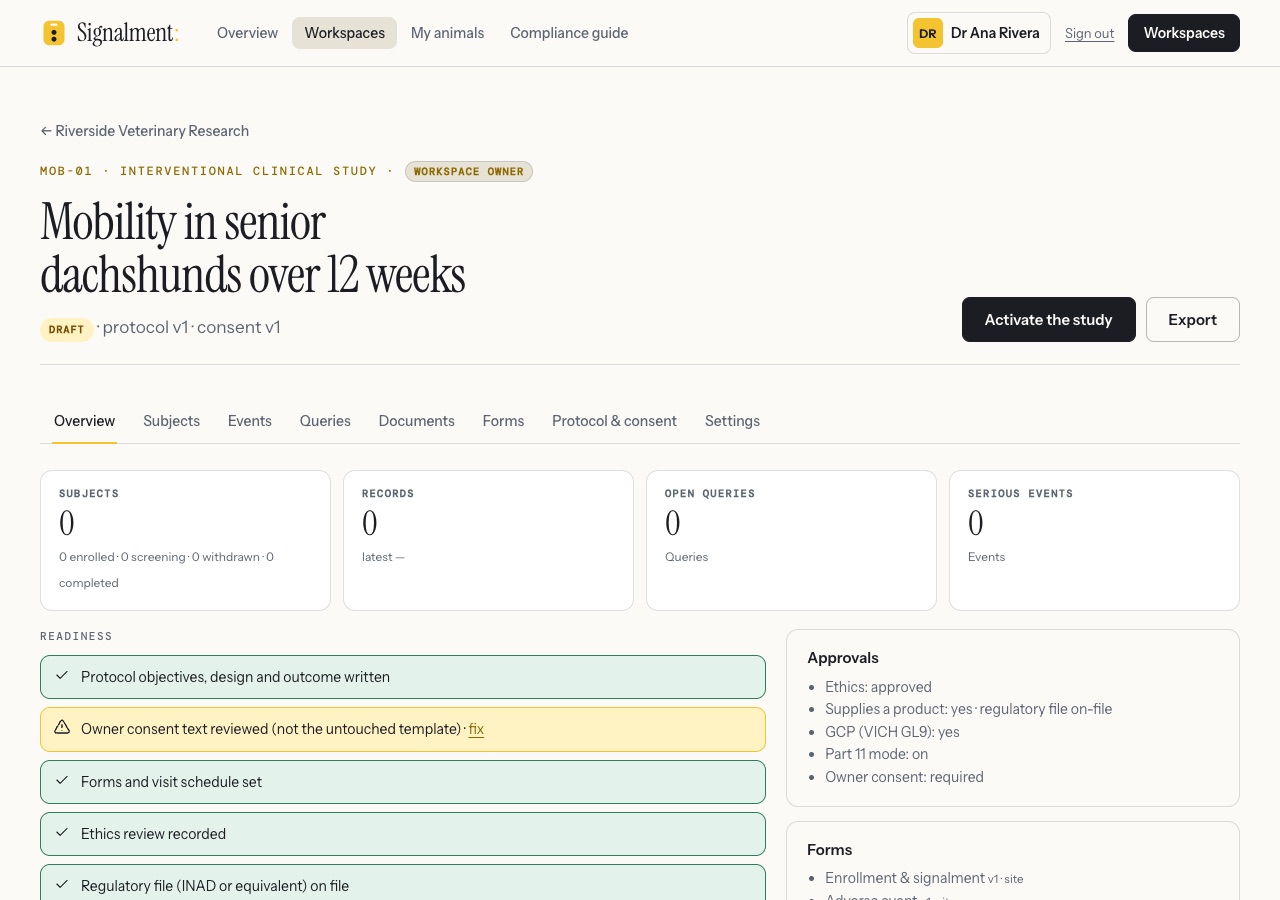
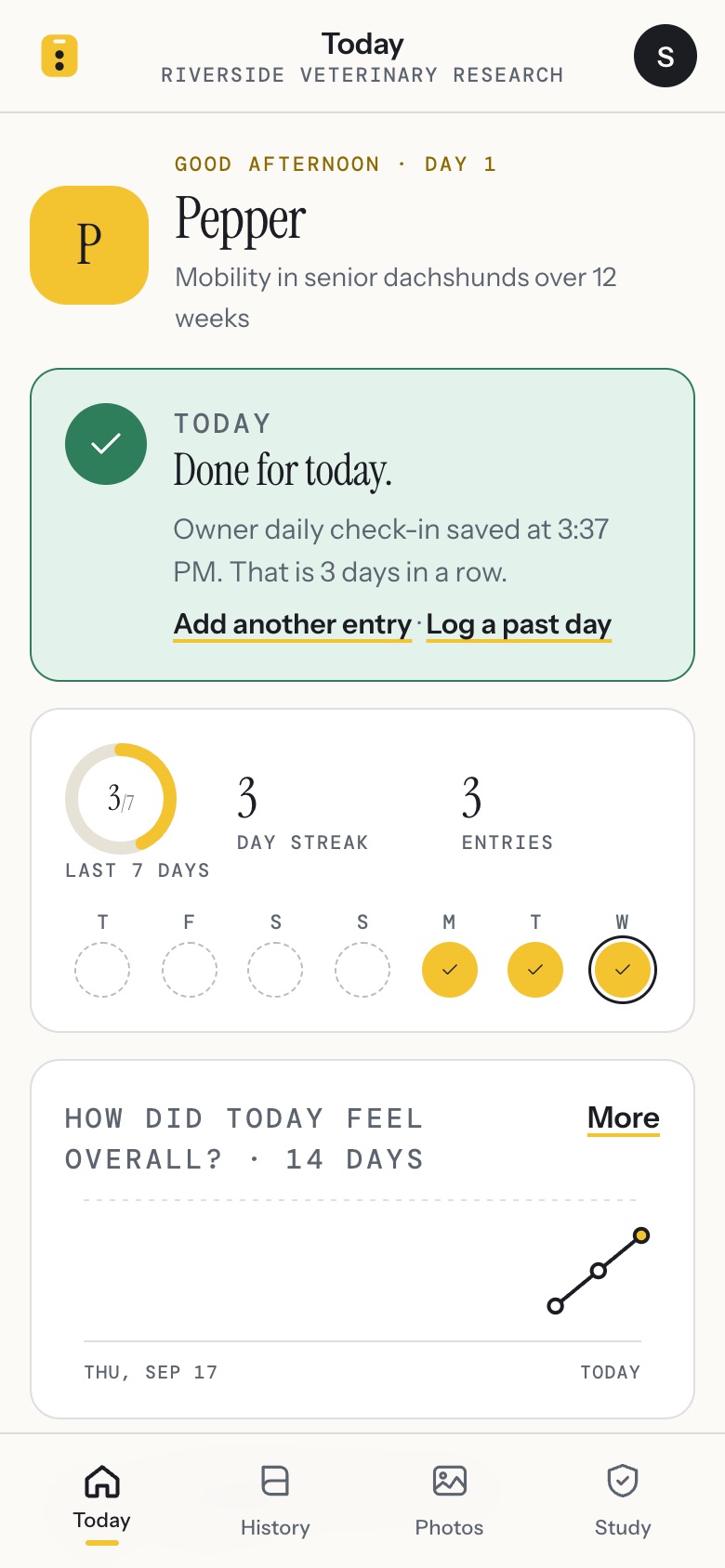
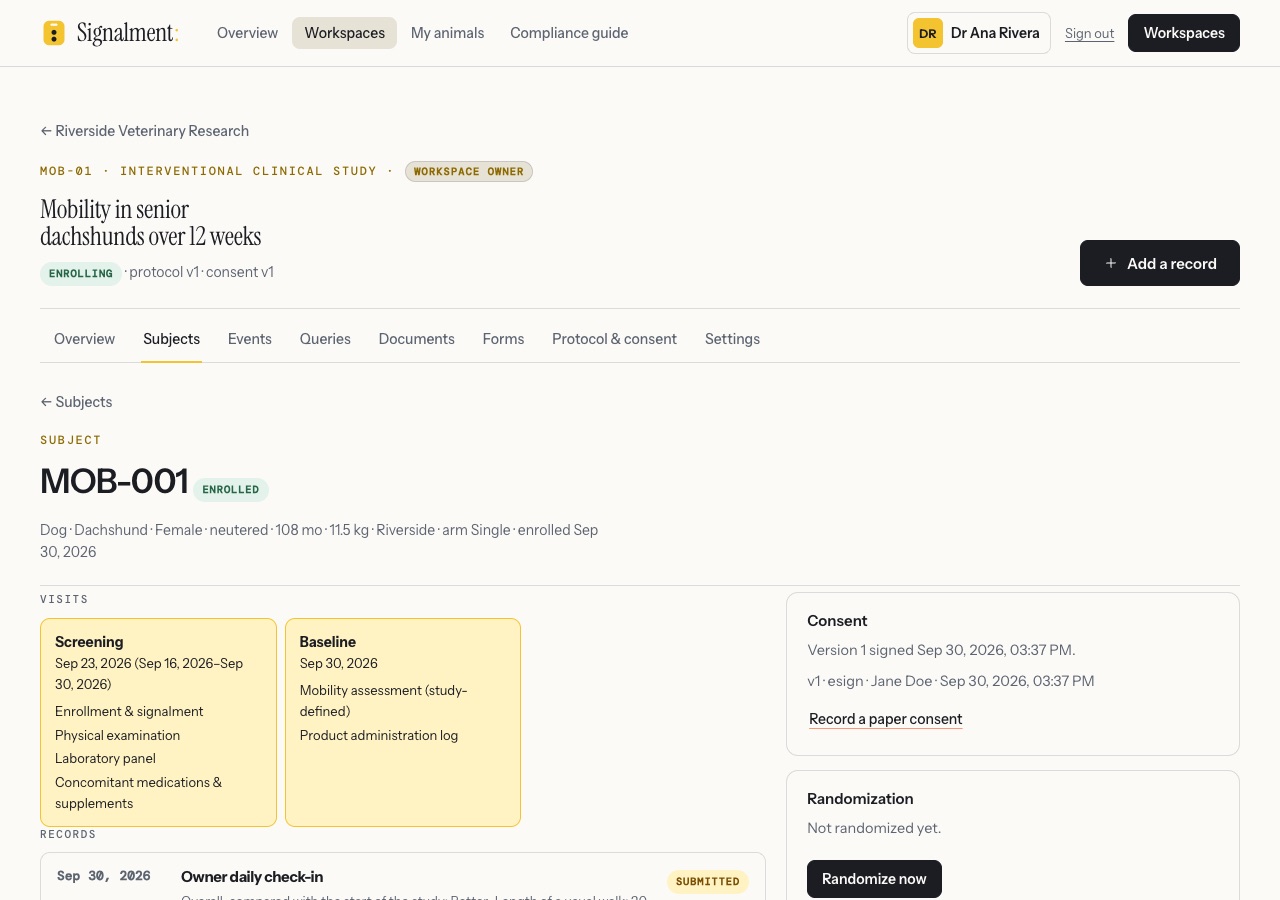
Example study · fictitious animals and people
Built for the people who run studies
Most veterinary field studies still run on spreadsheets, paper consent forms and email, because enterprise EDC costs more than the study. Signalment is the data system sized for a field study in client-owned animals, with the owner as a first-class user.
Enroll subjects by code, record visits on the forms, answer queries where they were raised, and watch owner check-ins arrive without retyping a diary card.
Activate with a signed attestation, verify records with your signature, lock the database with a fingerprint, and hand over exports whose chains verify.
Read everything except owner identities, raise and close queries, and check the audit chain yourself instead of trusting the vendor.
What is in the box
The parts of an enterprise eClinical stack a field study actually uses, built for veterinary specifics: VCPR, CVM, client-owned animals and their owners.
Enrollment, examinations, laboratory panels, dosing, concomitant medications, adverse events with the 21 CFR 514.3 serious criteria, deviations, end of study. Add fields or whole forms; every version is numbered.
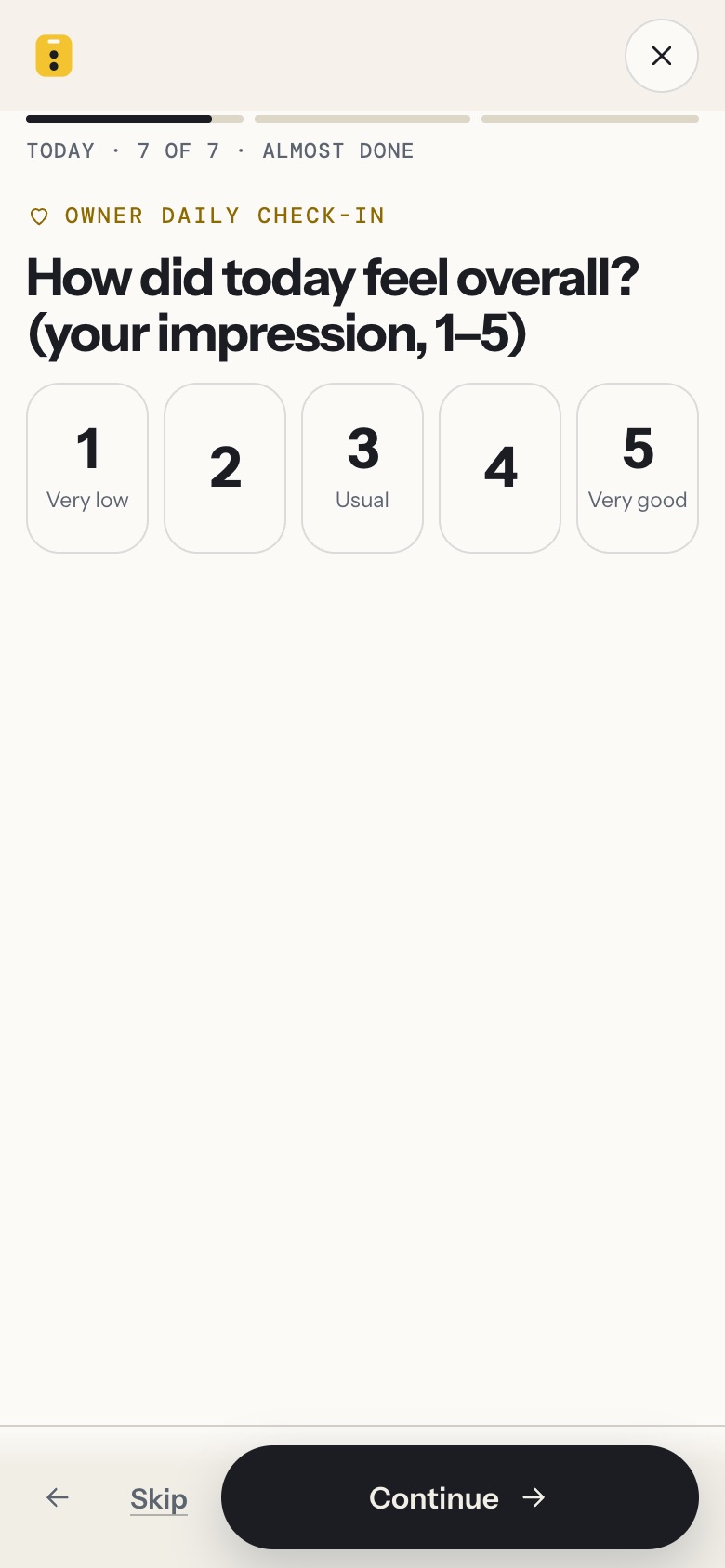
The owner signs consent on their phone and answers one question at a time, daily or weekly, with photos. Entries land under the subject code the same minute. Included in every plan.
Permuted blocks, concealed allocation, single or double blind, and a code-break log with a signature and an alert. What other vendors sell as an RTSM module.
Upload a PDF or a photo of a clinic record. The reader proposes lines with a source quote for each, a person accepts them, and the record keeps its source.
Monitors raise queries, the site answers in place, investigators verify with a signature that re-checks their password, and the database locks with a fingerprint.
Append-only, hash-chained records and audit entries; e-signatures bound to what was signed; CSV per form, a data dictionary and a JSON bundle a monitor verifies on their own laptop.
Compared with what you use today
Descriptions of other tools are from their public materials as of September 2026; REDCap was re-read in October 2026 and varies by institution. Bring your current export to the demo and compare.
| Capability | Spreadsheets and paper | REDCap | Enterprise EDC | Signalment |
|---|---|---|---|---|
| Time to first study | minutes, then chaos | the build, where your institution hosts it | weeks to months of implementation | about ten minutes, self-serve |
| Price | free | no charge to non-profit members, who host it | quoted per study | free pilot · $149 or $499 a month per workspace |
| Owner eDiary and eConsent | paper | surveys, the MyCap app and an e-Consent framework, set up per project | separate ePRO and eConsent modules | included |
| Randomization and blinding | no | a module; you supply the allocation table | separate RTSM module | included |
| Scanned records into CRFs | no | no | no | yes, sourced line by line |
| Audit trail | none | database log | database log | append-only, hash-chained, verifiable offline |
| Adverse events | free text | build it | human-trial vocabulary | 21 CFR 514.3 criteria and ABON causality |
| Says what stays your job | — | — | — | yes: INAD, ethics review, consent content, reporting |
Owner-reported outcomes
Paper diary cards come back late, incomplete and rewritten from memory. Here the owner signs consent on their phone and answers one question at a time; every entry is timestamped, receipted and visible to the site the same minute, under a subject code.
How it works
Ten minutes to set up, then the study runs where the animals are: at home with the owner and in the clinic at each visit.
Your practice, department or company. Invite investigators, coordinators, monitors and viewers with the access each one needs.
Start from a template: a 90-day observational study, a 12-week mobility trial, a registry, or blank. Protocol, schedule, forms and consent text come filled in.
Confirm the approvals the design needs and sign. The attestations and the signature are on the record.
Subject codes, not names. Owners record at home, the site records at visits, scanned records become sourced lines.
Answer the queries, verify the records, lock the database, and hand over exports whose chains verify.
Built for 21 CFR Part 11 and VICH GL9
The guide inside the workspace says what an INAD file, an IACUC review, VICH GL9 and Part 11 mean for your design. The filings stay yours; the records are built to hold up under a monitor, a reviewer or an FDA question.
No “certified compliant” badge. A validation summary, the test suite behind it, and an audit chain you verify yourself.
Pricing
Prices in US dollars, billed monthly and cancellable any time. A workspace is a practice, department or company; it runs several studies. No implementation fee, no per-study licence, no module upsell.
Pilot
Free
Try it, run a resident’s project or a small registry.
Practice
$149a month
A practice or a department running trials.
Institution
$499a month
A university clinical trials office or a sponsor.
Enterprise
By agreement
Multi-site programmes, single sign-on, a signed quality agreement and a named contact.
Questions study teams ask
It is built to Part 11: an append-only audit trail that records who, what, when and why; electronic signatures that re-check the signer’s password and bind to what was signed; access by role; exports; and a validation summary and test suite you can read. Compliance is a property of a study, not of software alone: your organization keeps its procedures, training records and its certification letter to FDA, and the workspace settings help you record them.
A validation summary, the automated test suite behind it, the data processing addendum listing every sub-processor, and exports whose audit chain verifies without our involvement. Enterprise adds a signed quality agreement, single sign-on and a named contact.
You may not need to. REDCap has surveys, a participant app, an e-Consent framework and a randomization module, and a team that knows it can build a client-owned study on them. Signalment is that study already built: an owner eDiary with eConsent from a phone, scanned records read into forms, randomization and blinding with a logged code break, hash-chained records and a lock with a fingerprint, with no server to run. Keep REDCap for what it already does for you.
Then you already pay per study and wait for an implementation. Run the next field study here in an afternoon on the free pilot, with the same forms, queries and signatures, and compare the two exports. If you outgrow us, the exports are open and verifiable.
On Cloudflare’s network in United States data centers, encrypted in transit and at rest. Owner identities are held in a key apart from study data and never leave with a pseudonymous export. The data processing addendum lists every sub-processor.
No. Licensed instruments are added by you under your own licence as custom forms. The templates use plain, study-defined scales so that you never publish on an instrument you did not license.
They get an email, tap a link, sign the consent and record a check-in in under a minute from the phone they already have. It installs to the home screen like an app, reminds them from their own calendar, and keeps a draft if they are interrupted. Paper consent can be recorded too, with the scanned form attached.
Pilot is free: two open studies, twenty-five subjects each, five team members. Practice is $149 a month and Institution $499 a month, billed through Stripe and cancellable any time. No per-study fees, no implementation fees. Enterprise programmes are priced by agreement.
VeDDRA coding, drug accountability ledgers, SAS and SEND exports, single sign-on and an API are on the roadmap. If your study needs one of them this quarter, say so on the demo call; it changes the order we build in.
Twenty minutes
On the call we open a workspace, set up your study from a template, invite an owner to your own phone, sign, record, raise a query, verify, lock and export. Then the workspace is yours to keep on the free plan.
Provided under the service terms, the data processing addendum and the privacy notice.